 WAIT, BEFORE YOU SCROLL DOWN! While I know a lot about cars, I don't know a lot about YOUR CAR! A repair manual is essential for repair and maintenance. I have a way for you to get one for FREE today.
 Click Here To Read More(Link opens in a new window)
On The Road
Oil Light ON?
Pull off the road and turn off the engine as soon as safely possible. Engine damage can result if you drive with the oil light on. Check oil level and add oil if needed. Also inspect for oil leaks which could have caused the low oil level.
Running synthetic oil and need to top off with conventional oil?
No problem, modern synthetic oils can be mixed with dino (conventional oil) without issue. Of course you will lose some of the benefit from having 100% synthetic oil in the engine, but if it's an emergency and all you can find is regular oil then it's the best option.
Video Clips
Automotive Oil
What do the oil numbers 10W-30 mean?
Your engines rotating parts are protected from heat and friction by a thin layer of oil. Understanding the viscosity ratings and detergents used in today's modern oils is critical to keeping your engine running. As an owner there is no more critical maintenance item than regular oil changes with the proper oil for your car or truck.
I receive a lot of questions regarding oil and the least understood part is the number system used to rate oils.
Oil weight, or viscosity, refers to how thick or thin the oil is. The temperature requirements set for oil by the Society of Automotive Engineers (SAE) is 0 degrees F (low) and 210 degrees F (high).
Oils meeting the SAE's low temperature requirements have a "W" after the viscosity rating (example: 10W), and oils that meet the high ratings have no letter (example SAE 30). An oil is rated for viscosity by heating it to a specified temperature, and then allowing it to flow out of a specifically sized hole. Its viscosity rating is determined by the length of time it takes to flow out of the hole. If it flows quickly, it gets a low rating. If it flows slowly, it gets a high rating.
Your engine needs oil that is thin enough for cold starts, and thick enough when the engine is hot. Since oil gets thinner when heated, and thicker when cooled, most of us use what are called multi-grade, or multi-viscosity oils. These oils meet SAE specifications for the low temperature requirements of a light oil and the high temperature requirements of a heavy oil. This is the best of both worlds and is accomplished by using special additives to increase viscosity with increase temperature.
What weight oil should I use?
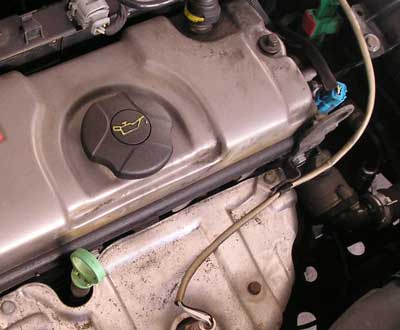
Check your owners manual, or under the hood. Most engines will have the recommended oil weight printed right on the oil fill cap, or on a label in the engine compartment.
Can I run a different weight oil in my car?
It's a tough call, deviating from the manufacturers specs can void warranty, and possibly cause issues with the engine. If you are low on oil and only have access to 10W-30 when your car recommends 5W-30, don't sweat it. Top it off, and at the next oil change just make sure you fill up with the correct weight oil.
Most manufacturers will recommend a range of operating temperatures and oil weights. So an owner in Alaska is going to need a different weight oil than an owner in Florida. High mileage engines may also benefit from a thicker oil as clearances open up do to wear, so going from a 5W-20 to a 5W-30 might help engine noise and wear on engines over 100K miles.
What is this synthetic oil I keep hearing about?
Synthetic oil is just that... synthetic! It's manufactured instead of dug up from the ground. It's made to be homogeneous (consistent), and will protect and last longer than conventional oil. Conventional oil as it comes out of the ground has all flavors of petroleum contained within it. Through the refining process, they produce all kinds of cool things. From heavy tar to thin volatile gasoline, it all comes from the oil pumped out of the ground. Engine oil is towards the heavy end of the products coming from the crude oil, but it can contain a little of the lighter and heavier components. This is what causes some of the instability of conventional oil, and allows it to break down quicker that a pure synthetic oil.
Should I run synthetic oil?
It depends on several factors! Do you have a newer car which uses regular oil (dino oil) and get your oil changed at regular intervals to keep your warranty satisfied? If so, it may not be economical to run synthetic since the oil change intervals will be lower and costs will go up. It still may be a good idea if you value your car and plan on keeping it way over 100,000 miles. The extra expense of synthetic will be cheap insurance in this case.
If your car is out of warranty, or came from the manufacturer with synthetic oil in the engine, then by all means run it. Keep in mind the oil change interval can be extended to 5,000 - 10,000 miles depending on the synthetic oil used and driving conditions. When synthetic oils first came out, there was a concern about leaking in older engines... this was due to a curious attribute of conventional oil which causes older cork and rope seals to swell or expand. Modern synthetic oils have an additive in them to account for this, so this is no longer a worry. This was really only ever an issue with older engines from pre-1980's which had rope main seals and it go turned in to an urban legend which had a life of it's own.
Want to learn more about synthetic oil, the refining process and the myth of the 3,000 mile oil change?
I am no expert, but I know one who is and he has compiled a handy PDF document you can download and learn probably more than you EVER wanted to know about oil. Click Here To Download It For FREE - Thank you Michael Kaufman