 WAIT, BEFORE YOU SCROLL DOWN! While I know a lot about cars, I don't know a lot about YOUR CAR! A repair manual is essential and I have a way for you to get one FREE.
 Click Here To Read More(Link opens in a new window)
On The Road
Fender or other body part fall off?
Move to a safe place, well off the road. Many times an plastic cover from the underside of your vehicle may fall off or partially fall off and drag on the road. If a major body part like a fender or door falls off, please don't drive the car, call a tow truck and get it fixed properly. Small parts can be taped, wired up with a coat hanger or removed for a short trip home or to your favorite garage or auto body shop.
Minor accident damage?
Assuming you can drive the car, get to a parking lot or well off the road to do a full inspection. Minor fender-benders can be deceptive, causing damage you can not see. For front end damage, check the radiator and any electrical wires to make sure there is no damage. All four wheels should be able to roll without hitting metal, plastic or any other part of the car. Make sure to turn the front wheels fully in both directions to check for interference. Don't drive your car if you are unsure of the damage, you can do more damage to the car on the drive home.
Auto Body Basics
Repair Rust - Learn How To Do Body Work
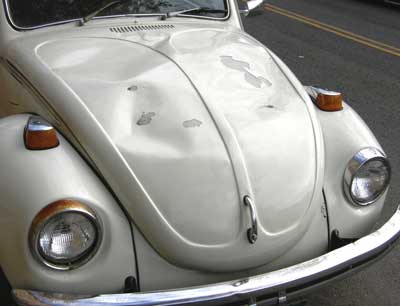
Rust and dents are inevitable, learn how to keep your car's body looking it's best. Get tips on preventing rust, and fixing dent and accident damage.
Your car's body is made up of steel, plastic, aluminum and sometimes fiberglass. These materials all have their plus and minuses, and all need to be cared for. Steel is cheap and strong, but can rust when unprotected. Plastic is flexible, durable, and can be molded into complex shapes unlike steel. Aluminum is light and strong, but comes at a price.
No matter what your vehicle is made of, there is a top layer of paint to protect the body from the elements. Automotive paints have a tough job protecting your car's body panels from the sun, dirt, rain and snow. While you can fix minor paint chips at home in the driveway, major panel resprays with today's modern paints are best left to professionals with the proper equipment and environmental controls.
When shopping for a new car, make sure you check on the rust protection plan, and consider getting a rust proof coating applied when the car is new. I would avoid rust proofing when buying a used car, as the sheet metal may have already started to rust, and covering over it, will not help.
Common Problems:
- Rust: The most common problem with an automobiles body is rust. Rust can work from the inside of your cars body and show up once it's too late. Fortunately most newer cars have very good rust proofing applied when built. Older cars can last a long time also if you follow some simple tips given below. For more information on rust repair Click Here...
- Accidents: It's bound to happen sometime, a fender bender or a major accident can really ruin your day. Make sure you have a reputable shop do the repair work and insist on original equipment parts. Cheap import parts can put you and your family at risk.
- Paint: The suns UV rays are your paints worst enemy. Park in the shade whenever possible and always keep a good coat of wax on your car. The wax should have UV protection just like the sunscreen you use at the beach.
Preventive Maintenance:
- Wash the underside of your car during and after the winter season. This will wash off the salt used to melt the ice on the roads. Folks in the southern and most west coast areas don't have this to worry about.
- Make sure all drain holes around the trunk and hood are clear. These holes allow water to exit the ledges around the trunk and hood and prevent rust. Also check your weather stripping around all openings for rips and tears. Water will sneak in where you least expect it and eventually rust away your car.
- Waxing your car will keep your paint protected from the elements but what about the other side of the body? The inside is often neglected on older cars. Rust proofing is an option but if the rust has already started just covering it will not stop it. The existing rust must be removed or chemically converted before rust coating is applied.
What to discuss with your body shop:
- Like looking for a mechanic, check your body shops accreditations. Also ask for their guarantee, good shops will do the job until you are satisfied. In my experience even the better shops have to redo a few jobs here and there. Do not hesitate to ask to have the job done to your liking.
- Inspect the repair job in different lighting situations. Some defects only appear when in direct sunlight or cloudy days. Most shops will give you a time period to inspect their work.
- When you get a quote, insist on using OEM parts, not cheap imported ones. This can put you and your family at risk.
- Make sure to ask around for recommendations, friend and family can lead you to a reputable body shop.
- Follow Directions! When you pick up your car from the autobody shop, you should get instructions on when the best time is to wash/wax your car for the first time. Modern paints are often cured with heat, but they can still require an out-gas period before sealing with a wax or synthetic polish.
Also see our Car Care section to help you keep your car looking it's best.